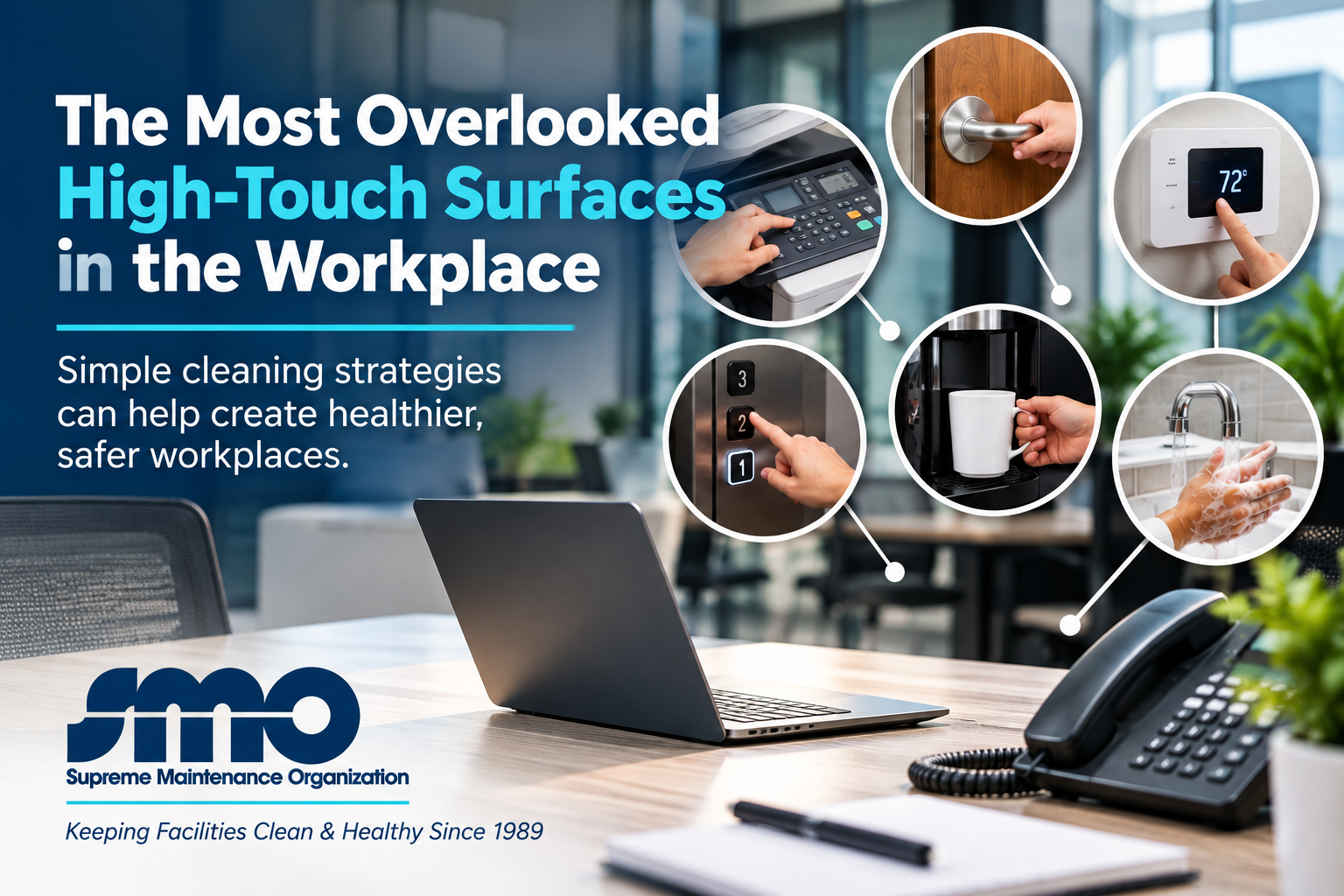
When facility managers think about high-touch surfaces, door handles, restroom fixtures, and elevator buttons often come to mind. But some of the most frequently handled surfaces in a workplace receive far less attention.
Shared equipment, breakroom appliances, conference room controls, and other everyday touchpoints can easily be overlooked during routine cleaning.
As organizations prepare for flu season, identifying these areas can help strengthen cleaning procedures and support healthier shared environments.
Why High-Touch Surfaces Deserve Attention
High-touch surfaces are objects or areas frequently contacted by multiple people throughout the day.
While the level of exposure varies by facility, these surfaces can accumulate dirt, oils, and microorganisms through repeated use.
Effective workplace cleaning involves more than identifying obvious touchpoints. It also requires understanding how employees and visitors actually move through and use a building.
1. Shared Office Equipment
Printers, copiers, scanners, and other shared office equipment may be used by dozens of employees each day.
Frequently overlooked touchpoints include:
- Printer control panels and touchscreens
- Copier lids and paper trays
- Shared keyboards and computer mice
- Telephone handsets and conference phones
- Equipment handles and access panels
These surfaces should be included in cleaning procedures using products appropriate for the equipment and manufacturer recommendations.
2. Breakroom Appliances and Controls
Breakrooms are gathering places where employees prepare food, take breaks, and interact with shared appliances.
Commonly overlooked surfaces include refrigerator handles, microwave keypads, coffee machine buttons, cabinet pulls, and water dispenser controls.
Cleaning programs should address these touchpoints in addition to countertops, tables, and sinks.
3. Conference Room Technology
Conference rooms often accommodate different groups throughout the workday, creating repeated contact with shared technology and furnishings.
Consider the following surfaces:
- Remote controls
- Video conferencing touch panels
- Tabletop power outlets
- Chair armrests
- Light switches and thermostat controls
Because electronics may require specialized cleaning methods, facility teams should follow manufacturer instructions and avoid applying liquids directly to sensitive equipment.
4. Building Access Points Beyond Door Handles
Door handles are an obvious cleaning priority, but nearby surfaces may receive just as much contact.
Examples include badge readers, entry keypads, automatic door buttons, handrails, push plates, and visitor check-in screens.
These surfaces are especially relevant in busy entrances, shared corridors, and other high-traffic areas.
5. Restroom Touchpoints That Are Easy to Miss
Restroom sanitation involves more than cleaning toilets, sinks, and floors.
Additional touchpoints may include:
- Soap and paper towel dispenser buttons
- Stall door latches
- Faucet handles
- Hand dryer controls
- Waste receptacle lids
- Restroom entrance push plates
Regular attention to these areas helps maintain cleanliness and supports a positive experience for building occupants.
6. Shared Workstations and Common Areas
In facilities where employees share desks, workstations, tools, or common areas, cleaning responsibilities should be clearly defined.
Frequently used surfaces may include workstation adjustment controls, chair armrests, shared tools, storage cabinet handles, and touchscreens.
Clear procedures help reduce uncertainty about which surfaces are cleaned, how often, and by whom.
How Facility Managers Can Improve High-Touch Cleaning
Start by observing how people use the building during a normal workday.
A practical high-touch cleaning review should:
- Identify surfaces used by multiple people.
- Review current cleaning schedules and responsibilities.
- Prioritize heavily used entrances, restrooms, and shared spaces.
- Select products and procedures appropriate for each surface.
- Determine when targeted disinfection is appropriate.
- Monitor results and adjust cleaning frequency as facility needs change.
Remember that cleaning and disinfecting serve different purposes. Routine cleaning removes dirt and many germs, while disinfecting uses products designed to kill specified germs when used according to their instructions.
Learn more about SMO’s commercial disinfecting services.
A Healthier Workplace Starts With the Details
High-touch cleaning should be based on the way a facility operates, not simply a standard checklist.
At Supreme Maintenance Organization (SMO), our commercial janitorial cleaning services support organizations seeking consistent, professional cleaning programs tailored to their facilities.
By paying attention to overlooked touchpoints, facility managers can strengthen everyday cleaning practices and maintain cleaner, healthier workplaces.
Keeping Facilities Clean & Healthy Since 1989
Looking for a cleaning partner that values people as much as performance?
Contact Supreme Maintenance Organization today to learn how our professional janitorial and facility services can support your organization.
📞 1-800-717-4766
🌐 https://smoworks.com/