
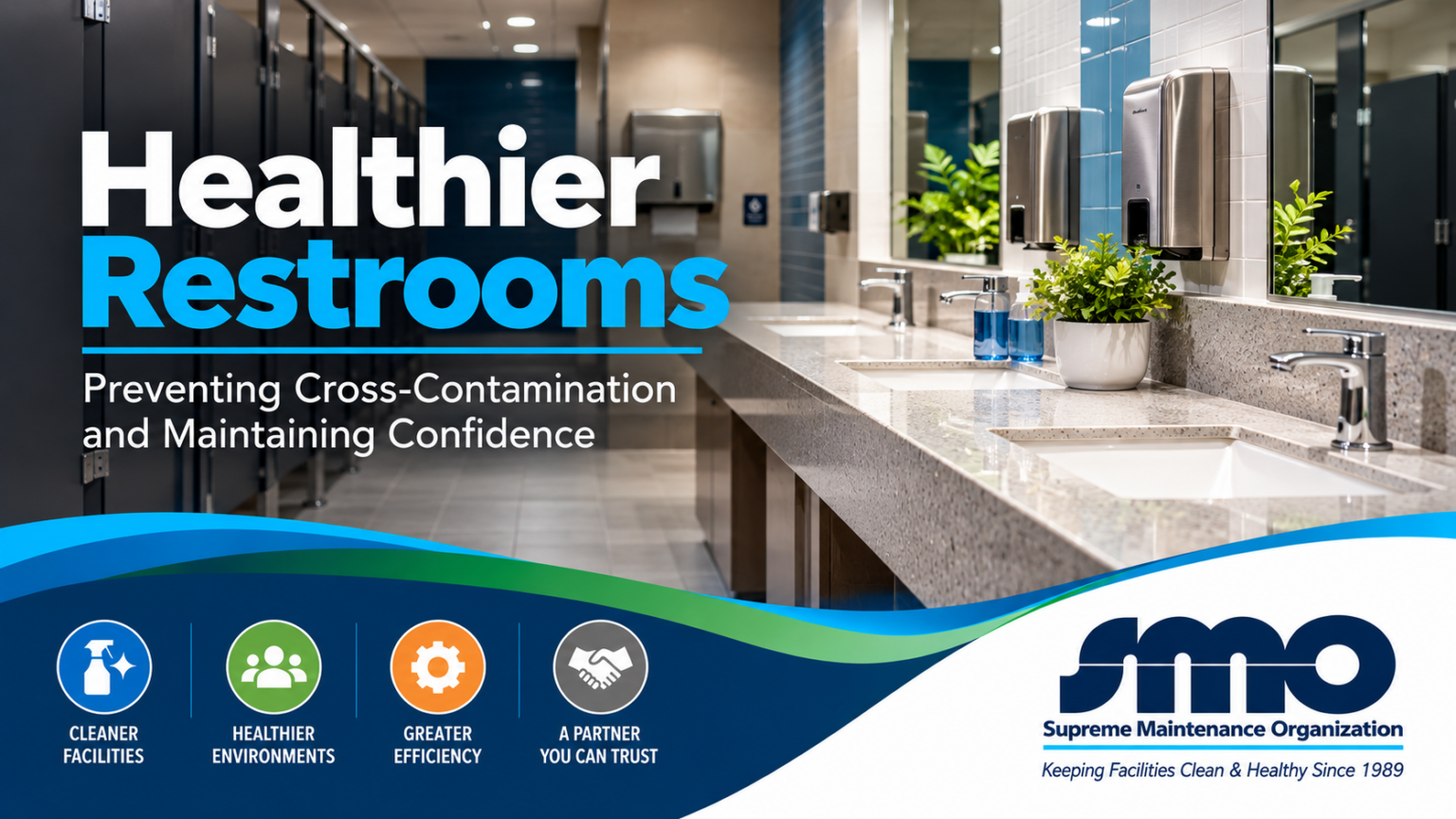
A clean restroom does more than make a good impression. It helps protect building occupants, supports a healthier workplace, and reflects the overall quality of a facility’s cleaning program.
Restrooms are among the most frequently used and closely scrutinized spaces in any commercial facility. Whether in an office building, school, healthcare environment, or industrial workplace, restroom conditions can significantly influence how employees, customers, and visitors perceive the entire property.
But effective restroom sanitation involves much more than keeping sinks shiny, mirrors spotless, and floors clean. It requires consistent cleaning procedures, appropriate disinfectant use, attention to high-touch surfaces, and practices designed to reduce cross-contamination.
For facility managers, understanding these priorities is essential to maintaining healthier restrooms and building confidence among everyone who uses them.
Why Restroom Sanitation Matters
Commercial restrooms present unique cleaning challenges. Multiple users share the same fixtures and surfaces throughout the day, often touching door handles, faucets, dispensers, and other common contact points.
Moisture, frequent use, and the presence of organic material can also create conditions that require careful sanitation practices.
When restroom maintenance falls short, the consequences extend beyond unpleasant appearances or odors. Poor cleaning practices can contribute to the transfer of contaminants between surfaces, while inadequate supplies or neglected fixtures can leave building occupants questioning the overall cleanliness of the facility.
A well-managed restroom cleaning program should address three essential goals:
- Cleanliness: Remove visible soil, residue, and organic material from surfaces.
- Hygiene: Reduce contamination through appropriate cleaning, disinfection, and handwashing support.
- Confidence: Provide a consistently clean, well-stocked environment that reassures employees and visitors.
Achieving these goals requires both the right procedures and consistent execution.
Understanding Cross-Contamination in Restrooms
Cross-contamination occurs when microorganisms or other contaminants are transferred from one surface, object, or location to another.
In commercial restrooms, this can happen through improperly handled cleaning equipment, contaminated cloths, shared tools, or contact with frequently touched surfaces.
For example, using the same cleaning cloth on a toilet fixture and then on a sink countertop can transfer contaminants between areas that should be cleaned separately.
Similarly, reusable mop heads or cleaning tools that are not properly maintained can spread soil and contaminants rather than remove them.
Preventing cross-contamination begins with establishing clear procedures for how cleaning tools, chemicals, and equipment are used throughout the restroom.
Five Practices That Help Prevent Cross-Contamination
1. Use Color-Coded Cleaning Equipment
Assigning different cloths, mop heads, and tools to specific cleaning areas helps reduce the risk of transferring contaminants between restroom fixtures.
For example, equipment designated for toilets and urinals should remain separate from tools used on sinks, countertops, and other surfaces.
Color-coding makes these distinctions easier for cleaning teams to recognize and follow consistently.
2. Clean From Lower-Risk Areas to Higher-Risk Areas
A systematic cleaning sequence helps prevent contaminants from being carried into areas that have already been cleaned.
In general, teams should address relatively cleaner surfaces before moving to heavily contaminated fixtures, while following established procedures for each facility.
Toilets, urinals, and their surrounding areas should receive dedicated attention and appropriately designated equipment.
3. Follow Proper Cleaning and Disinfection Procedures
Cleaning and disinfecting are related but distinct activities.
Cleaning removes soil and organic material from surfaces. Disinfection uses an appropriate product to inactivate specified microorganisms when used according to its label.
Many disinfectants require surfaces to remain visibly wet for a designated contact time to work as intended.
Skipping cleaning steps, using incorrect dilution ratios, or wiping disinfectants away too quickly can reduce their effectiveness.
SMO’s disinfecting services can supplement routine facility cleaning when additional disinfection is appropriate.
4. Focus on Frequently Touched Surfaces
High-touch surfaces deserve particular attention because they are contacted repeatedly throughout the day.
These include:
- Door handles and push plates
- Faucet handles and sink controls
- Toilet and urinal flush handles
- Stall door latches
- Soap and paper towel dispensers
- Countertops and accessible grab bars
- Light switches and other shared controls
Cleaning frequency should reflect restroom traffic, facility use, and the needs of building occupants.
5. Maintain and Store Cleaning Equipment Properly
Cleaning equipment should be cleaned, dried, and stored according to established procedures.
Reusable cloths and mop heads require appropriate laundering or replacement. Tools should be stored separately from clean consumables, and chemical containers should be properly labeled.
These practices help ensure cleaning equipment does not become another source of contamination.
Restroom Confidence Starts With Consistency
A restroom can be thoroughly cleaned in the morning and still require attention by midday.
In busy commercial facilities, maintaining acceptable conditions throughout operating hours often requires scheduled inspections and supplemental cleaning.
Facility managers should consider restroom traffic patterns, peak occupancy periods, and recurring maintenance concerns when determining service frequency.
A dependable restroom maintenance program includes:
- Regular inspections throughout the day
- Prompt attention to spills, odors, and visible soil
- Consistent replenishment of soap, paper products, and other supplies
- Routine cleaning of high-touch surfaces
- Scheduled deep cleaning of fixtures, floors, and hard-to-reach areas
- Clear reporting procedures for plumbing problems or damaged fixtures
For high-traffic environments, day porter services can provide additional support by addressing restroom conditions between scheduled janitorial cleaning periods. These services can complement a comprehensive commercial janitorial cleaning program.
The goal is not simply to deliver a clean restroom once a day. It is to maintain a consistent standard throughout the building’s operating hours.
The Connection Between Restroom Conditions and Facility Perception
Restrooms often serve as an informal measure of how well a facility is managed.
Employees and visitors may never see a building’s cleaning schedules, inspection reports, or quality assurance procedures. However, they can immediately notice an empty soap dispenser, an overflowing waste receptacle, or an unpleasant odor.
These experiences can influence their perception of the entire facility.
Conversely, clean, well-maintained restrooms communicate attention to detail and respect for the people who use the building.
For employers, property managers, and facility administrators, restroom sanitation is therefore both an operational responsibility and an important part of the occupant experience.
Building a More Effective Restroom Cleaning Program
Maintaining healthier restrooms requires a structured approach rather than relying solely on visual inspections.
Facility managers should regularly evaluate whether their current cleaning program addresses the actual demands of the building.
Are Restroom Cleaning Frequencies Appropriate?
Restrooms in high-traffic areas may need more frequent attention than those serving smaller groups of occupants.
Are Cleaning Teams Following Consistent Procedures?
Written cleaning protocols, appropriate training, and regular supervision help establish reliable standards.
Are the Correct Products Being Used?
Cleaning and disinfecting products should be appropriate for the surfaces involved and used according to manufacturer instructions and applicable label requirements.
Are Supplies Consistently Available?
Soap, hand-drying materials, and other essential supplies support good hygiene and contribute to occupant confidence.
Is Cleaning Quality Being Monitored?
Routine inspections, documented findings, and timely corrective action help identify problems before they become recurring complaints.
Addressing these questions can help facility managers improve both restroom cleanliness and the consistency of their overall cleaning program.
How SMO Supports Healthier Facilities
At Supreme Maintenance Organization (SMO), we understand that restroom sanitation is an essential component of a successful commercial cleaning program.
Our approach to professional janitorial cleaning services emphasizes dependable cleaning procedures, attention to high-touch surfaces, consistent service delivery, and the importance of maintaining clean, healthy environments.
From routine restroom cleaning to specialized cleaning needs, SMO works with organizations to support facility conditions that meet the demands of their buildings and the people who use them.
SMO also offers Special Services to address cleaning needs beyond routine janitorial maintenance.
Our Quality Assurance Program supports consistent service standards through inspections, reporting, and ongoing improvement.
Because healthier facilities begin with consistent attention to the spaces people rely on every day.
A Cleaner Restroom. A Healthier Workplace. Greater Confidence.
Restroom sanitation is about more than appearance. It involves preventing cross-contamination, supporting proper hygiene, and maintaining a consistent standard of cleanliness throughout the day.
With appropriate cleaning procedures, trained personnel, and dependable quality oversight, facility managers can help create restrooms that are cleaner, healthier, and more welcoming.
Is your facility’s restroom cleaning program meeting expectations?
SMO provides commercial janitorial, disinfecting, and Special Services for facilities throughout North Carolina, South Carolina, Georgia, and Florida.
Looking for a cleaning partner that values people as much as performance?
Contact Supreme Maintenance Organization today to learn how our professional janitorial and facility services can support your organization.
📞 1-800-717-4766