
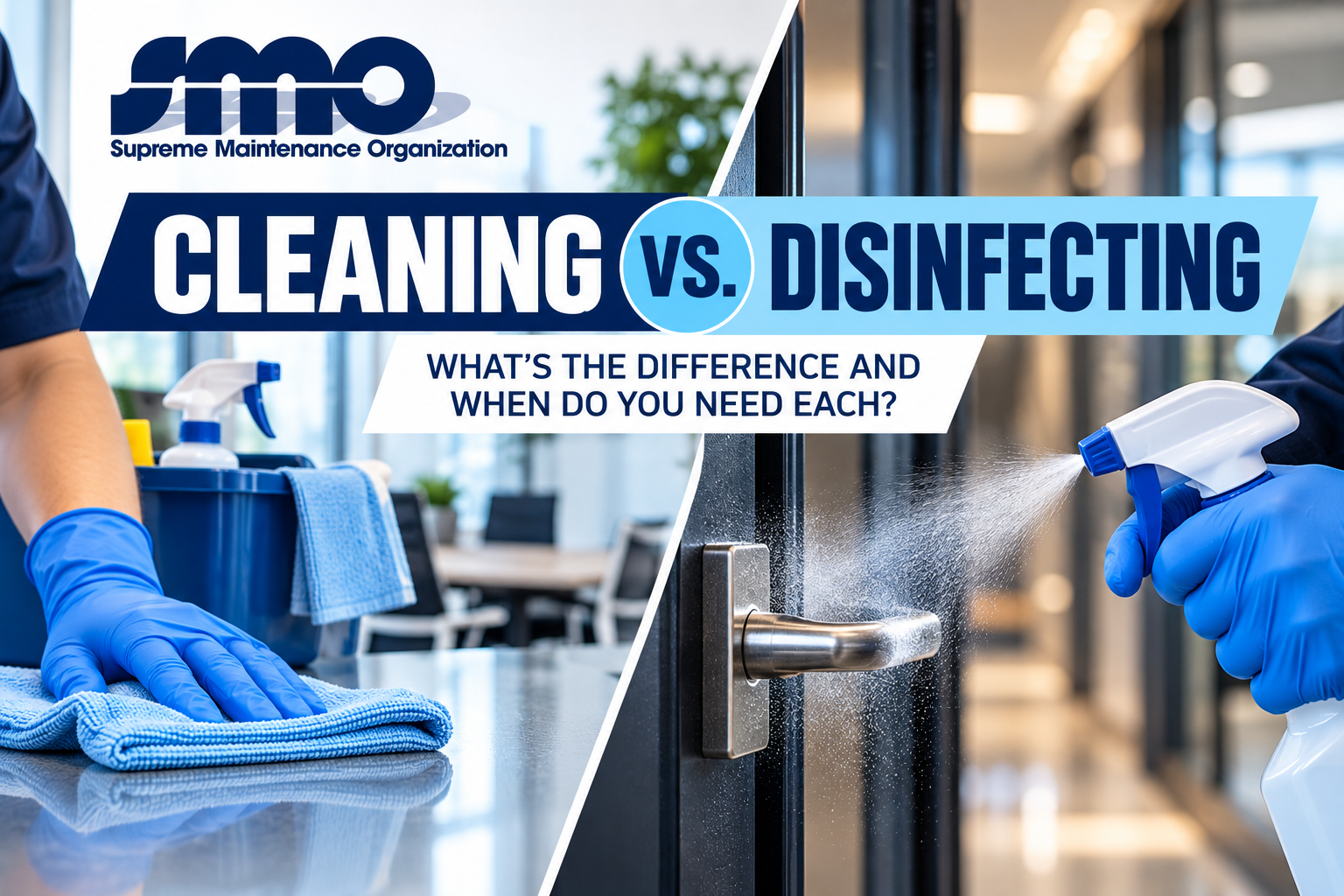
Cleaning and disinfecting are often discussed together, but they are not interchangeable. For facility managers responsible for maintaining clean, healthy workplaces, understanding the difference is an important part of developing an effective cleaning program.
Both processes play a role in maintaining offices, schools, industrial facilities, and other shared environments. The key is understanding what each accomplishes, when it is appropriate, and how they work together.
What Is Cleaning?
Cleaning is the physical removal of dirt, dust, debris, and many germs from surfaces. It typically involves water, detergents or other cleaning products, and mechanical action such as wiping or scrubbing.
Routine cleaning helps maintain a facility’s appearance while removing substances that accumulate on frequently used surfaces.
Common examples include:
- Wiping desks, counters, and work surfaces
- Cleaning restroom fixtures and sinks
- Mopping floors and vacuuming carpets
- Removing fingerprints and soil from doors and glass
- Cleaning shared equipment and breakroom surfaces
Cleaning removes many germs, but it does not necessarily kill the germs that remain.
What Is Disinfecting?
Disinfecting uses products designed to kill specified germs on surfaces when applied according to their labels.
Disinfection is particularly useful in areas where reducing disease-causing microorganisms is an important part of a facility’s cleaning procedures.
Surfaces that may require targeted disinfection include:
- Door handles and push plates
- Restroom touchpoints
- Shared keyboards and equipment, when compatible
- Elevator buttons and handrails
- Frequently touched counters and workstations
Not every disinfectant is suitable for every surface or effective against every microorganism. Product selection, correct application, and required contact time all matter.
Learn more about SMO’s commercial disinfecting services.
Why Cleaning Usually Comes First
One of the most important distinctions is that disinfecting does not replace cleaning.
Visible dirt and organic material can interfere with the effectiveness of some disinfectants. For that reason, surfaces generally need to be cleaned before they are disinfected, unless the product label specifically provides instructions for a combined cleaning and disinfection process.
For example, a heavily used breakroom counter may first require the removal of food residue and visible soil before an appropriate disinfectant is applied.
Following the proper sequence helps ensure each process accomplishes its intended purpose.
Does Everything Need to Be Disinfected?
No. An effective facility cleaning program does not require every surface to be disinfected every time it is cleaned.
Routine cleaning is appropriate for many surfaces and situations. Targeted disinfection may be necessary based on the type of facility, how surfaces are used, applicable requirements, and current health concerns.
The goal is to use the right procedure for the right surface rather than applying the same treatment everywhere.
When Is Disinfection Particularly Important?
Facilities may need to place additional emphasis on disinfection during periods of increased illness or when specific surfaces are exposed to potentially infectious materials.
High-touch areas deserve particular consideration because they are frequently contacted by multiple people throughout the day.
Facility managers should review cleaning frequency and disinfection procedures for shared spaces, restrooms, entrances, and other heavily used areas.
Product Selection and Contact Time Matter
Even an appropriate disinfectant may not perform as intended if it is applied incorrectly.
Facility cleaning teams should understand:
- Which microorganisms the product is intended to address
- Whether the product is appropriate for the surface
- Whether dilution is required
- How long the surface must remain wet
- What personal protective equipment and ventilation precautions are required
Following manufacturer instructions and applicable safety requirements helps protect both building occupants and cleaning personnel.
Build the Right Process for Your Facility
Every workplace has different traffic patterns, occupancy levels, and operational needs.
A well-designed cleaning program considers those differences rather than relying on a one-size-fits-all approach.
At Supreme Maintenance Organization (SMO), our commercial janitorial cleaning services help organizations maintain consistent cleaning procedures and healthier facility environments.
Understanding when to clean, when to disinfect, and how to perform each process correctly is an important part of maintaining a workplace that employees, visitors, and customers can feel confident using.
Clean with Purpose.
Looking for a cleaning partner that values people as much as performance?
Contact Supreme Maintenance Organization today to learn how our professional janitorial and facility services can support your organization.
📞 1-800-717-4766
🌐 https://smoworks.com/