
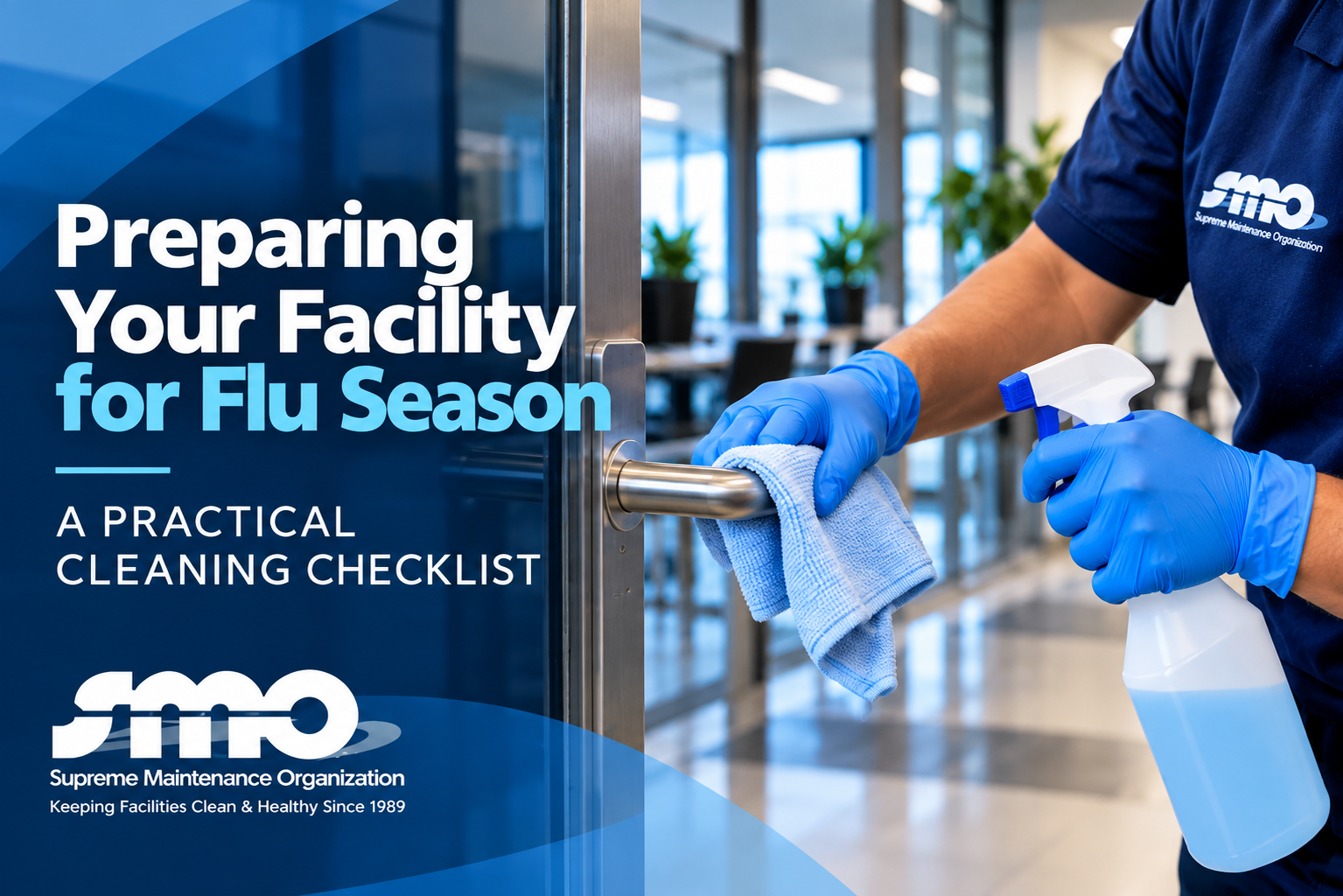
Flu season can create challenges for any workplace, particularly facilities with large numbers of employees, visitors, and shared spaces. While no cleaning program can eliminate the possibility of illness, a well-planned approach can help maintain a cleaner, healthier environment throughout the season.
For facility managers, the key is to prepare before absenteeism increases or seasonal illness begins disrupting normal operations. Reviewing high-touch surfaces, restrooms, shared spaces, supplies, and cleaning procedures before flu season peaks can help ensure your facility is ready.
Identify High-Touch Surfaces
Routine cleaning should include more than floors, desks, and other highly visible areas. Frequently touched surfaces can require additional attention during flu season.
Depending on the facility, these may include:
- Door handles and push plates
- Elevator buttons
- Handrails
- Light switches
- Shared equipment
- Breakroom appliances
- Conference-room surfaces
- Vending machines
- Reception counters
- Touchscreens and other shared controls
Walk through the facility from an employee or visitor’s perspective. Anything touched repeatedly throughout the day should be considered when developing the cleaning plan.
Review Cleaning and Disinfection Procedures
Cleaning and disinfecting are related, but they aren’t the same process.
Cleaning removes dirt, debris, and many contaminants from surfaces. Disinfection uses appropriate products and procedures to reduce microorganisms on surfaces.
During flu season, facility managers should understand which areas are simply being cleaned and which require disinfection. SMO’s disinfecting services can supplement routine facility cleaning when additional attention to high-touch areas is appropriate.
Products should also be used according to their directions, including appropriate application methods and required contact times. Using a disinfectant incorrectly can reduce its effectiveness, making proper procedures just as important as product selection.
Give Restrooms Additional Attention
Restrooms are among the most heavily used shared spaces in many facilities. They can also have a significant influence on how employees, customers, patients, students, and visitors perceive the cleanliness of the entire building.
A flu-season review should consider:
- Cleaning frequency
- High-touch fixtures
- Soap availability
- Paper-product supplies
- Trash removal
- Odor control
- Floors and partitions
- Dispensers and door hardware
Restroom cleaning should be part of a consistent commercial janitorial cleaning program rather than simply a response to visible problems or occupant complaints.
Don’t Forget Shared Employee Spaces
Breakrooms, conference rooms, and other common areas can contain numerous shared touchpoints.
Microwave handles, refrigerator doors, coffee equipment, countertops, tables, chair backs, conference-room controls, and shared technology are easy to overlook when attention is concentrated primarily on offices and restrooms.
These areas should be clearly included in the cleaning scope rather than assuming they’ll receive adequate attention during routine service.
Review Supplies Before Demand Increases
Flu season isn’t the ideal time to discover that essential cleaning supplies are running low.
Review inventories of cleaning products, disinfectants, hand soap, paper products, trash liners, and other frequently used materials. Facilities with multiple locations or particularly high occupancy may benefit from establishing minimum inventory levels for essential supplies.
Maintaining adequate supplies can help prevent service disruptions when usage increases.
Evaluate Cleaning Frequency
Some facilities may need to temporarily increase attention to particular areas during periods of increased illness. That doesn’t necessarily mean cleaning everything more frequently.
A better approach is to identify the areas with the greatest traffic and contact and determine whether current service frequencies remain appropriate.
Entrances, restrooms, breakrooms, shared workspaces, elevators, and other high-use areas may require different frequencies than offices or spaces with limited occupancy. A cleaning program should reflect how the facility is actually being used.
Communicate With Your Cleaning Team
Your cleaning provider should understand the facility’s priorities.
Facility managers and cleaning teams should communicate about changing conditions, unusual absenteeism, high-traffic events, and areas requiring additional attention. Good communication allows cleaning resources to be directed where they’re needed most.
This is also a good time to review the facility’s scope of work and confirm that responsibilities are clearly defined. Routine janitorial services, targeted disinfection, restroom sanitation, and periodic specialty cleaning should work together as parts of a coordinated facility cleaning program.
Prepare Before Flu Season Peaks
The best time to evaluate a flu-season cleaning program is before problems develop.
Review your high-touch surfaces, cleaning frequencies, restroom procedures, supplies, and communication processes now. Small adjustments made proactively can help your facility maintain a cleaner, healthier, and more confident environment throughout flu season.
SMO provides commercial janitorial, disinfecting, and Special Services for facilities throughout North Carolina, South Carolina, Georgia, and Florida.
Looking for a cleaning partner that values people as much as performance?
Contact Supreme Maintenance Organization today to learn how our professional janitorial and facility services can support your organization.
📞 1-800-717-4766
🌐 https://smoworks.com/